
Choosing a new boiler is one of the most important decisions homeowners make when upgrading their heating system. With energy costs remaining high and efficiency becoming a priority, selecting the right boiler can have a significant impact on your comfort, hot water supply, and monthly bills.
Two of the most popular options in the UK are combi boilers and system boilers. While both provide reliable heating and hot water, they operate differently and suit different household needs. Understanding the differences between these boiler types will help you make the right investment for your property.
In this guide, we'll compare combi boilers and system boilers, explain their advantages and disadvantages, and help you determine which option is best for your home.
Understanding the Different Types of Boilers
Before comparing the two systems, it's useful to understand the three main types of boilers commonly found in UK homes:
- Combi boilers
- System boilers
- Standard (regular) boilers
Among these, combi boilers and system boilers are now the preferred choices because they offer high energy efficiency and are compatible with modern heating controls.
If you're considering a new boiler installation, understanding how these systems work can help ensure you choose a solution that meets both your current and future needs.
What Is a Combi Boiler?
A combination boiler, commonly known as a combi boiler, provides both central heating and hot water directly from the mains supply. Unlike traditional systems, combi boilers do not require a separate hot water cylinder or cold-water storage tank.
When you turn on a tap, the boiler heats water instantly, providing hot water on demand.
Because of their compact design, combi boilers have become the most popular type of boiler in the UK.
Modern combi boilers combine several essential heating components into a single unit, making them highly efficient and space-saving. They are typically installed in kitchens, utility rooms, or airing cupboards and can even fit inside standard kitchen cabinets.
One of the main reasons homeowners choose a combi boiler is convenience. Since hot water is heated as required, there is no need to store large amounts of water or wait for a cylinder to reheat. This helps reduce energy waste and can contribute to lower household energy bills.
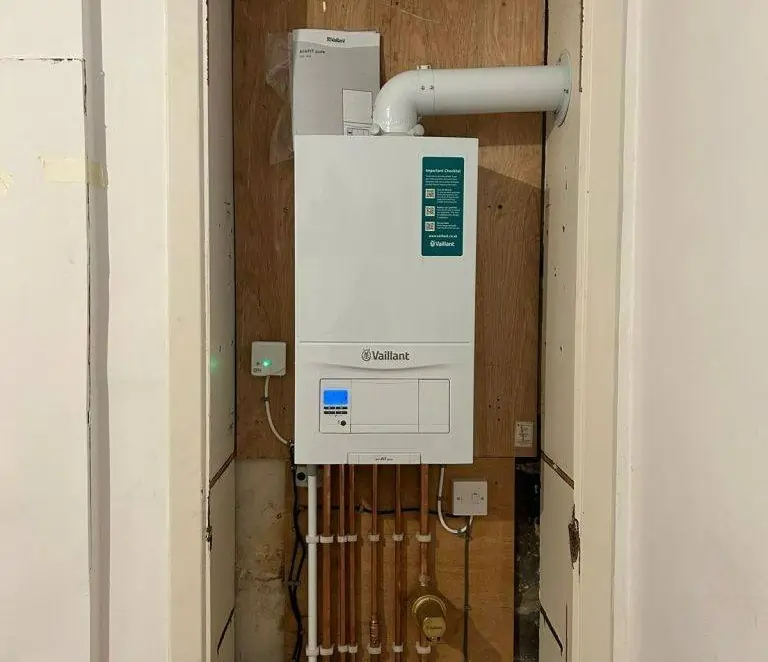
Combi boilers are available in a range of outputs to suit different property sizes, from small flats and terraced houses to larger family homes with moderate hot water demands. Many modern models are also compatible with smart thermostats, allowing homeowners to improve energy efficiency and gain greater control over their heating.
Thanks to their reliability, compact size, and excellent efficiency ratings, combi boilers have become the preferred choice for millions of UK households looking for an effective and economical heating solution.
Benefits of a Combi Boiler
One of the biggest advantages of a combi boiler is that it saves space. Since there is no need for a hot water cylinder, they are ideal for flats, apartments, and smaller homes.
Another benefit is energy efficiency. Modern condensing combi boilers can achieve efficiencies above 90%, helping homeowners reduce their heating bills.
Combi boilers also provide instant hot water, meaning you don't need to wait for a cylinder to reheat after using hot water.
Additional advantages include:
- Lower installation costs compared with some larger systems.
- Fewer components requiring maintenance.
- Compact design suitable for kitchen cupboards.
- Excellent efficiency ratings.
Potential Drawbacks of Combi Boilers
Although combi boilers offer many advantages, they are not suitable for every property.
Since hot water is heated on demand, water pressure may decrease if multiple taps or showers are used simultaneously. For larger households with several bathrooms, this can become inconvenient.
Homes with high hot water demands may find a system boiler more suitable.
What Is a System Boiler?
A system boiler works alongside a separate hot water cylinder. Unlike conventional boilers, many of the heating components are built into the boiler itself, making installation simpler and more efficient.
System boilers draw water directly from the mains and store hot water in a cylinder, allowing multiple outlets to be used at the same time.
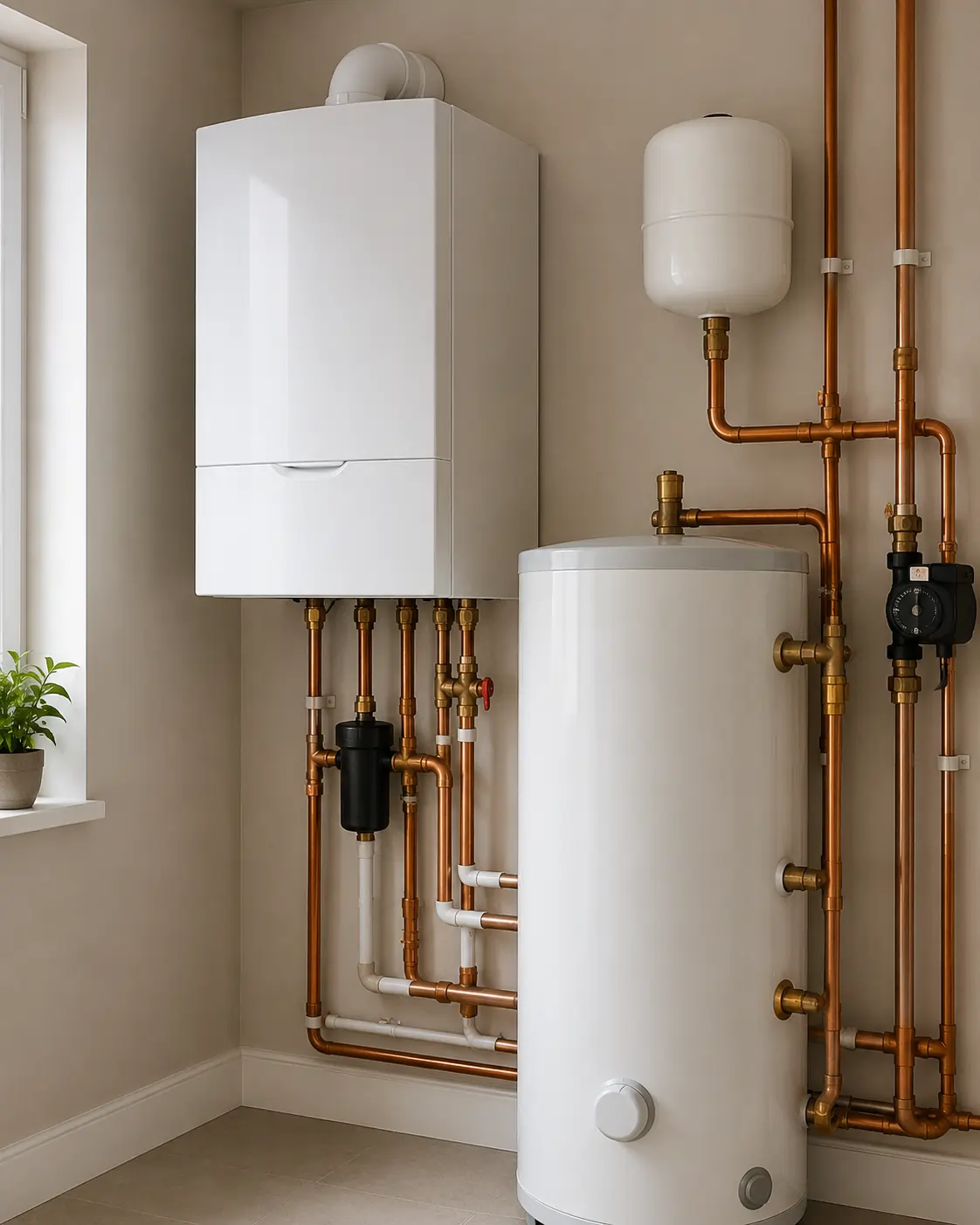
This makes them particularly suitable for larger households.
Because hot water is stored and ready for use, system boilers can deliver a more consistent supply to multiple bathrooms and taps simultaneously. This makes them an excellent choice for busy family homes where several people may need hot water at the same time, especially during mornings and evenings.
Unlike traditional regular boilers, system boilers do not require a cold-water storage tank in the loft. This helps save space and simplifies the installation process while still providing the benefits of stored hot water. The built-in components also reduce the amount of external equipment needed, making the system more compact and easier to maintain.
Modern system boilers are highly energy efficient and are available in various sizes and outputs to suit different property types. They are particularly well suited to homes with two or more bathrooms, larger families, and properties with higher hot water demands. Many models are also compatible with smart heating controls and renewable technologies, such as solar thermal systems, helping homeowners improve efficiency and reduce energy consumption.
Thanks to their reliability and ability to provide strong hot water performance, system boilers have become a popular option for homeowners looking to upgrade their heating system without compromising on comfort or convenience.
Benefits of a System Boiler
One of the main advantages of a system boiler is its ability to supply hot water to several bathrooms simultaneously without a noticeable loss in pressure.
This makes system boilers an excellent choice for family homes where hot water demand is higher.
Other advantages include:
- Consistent water pressure throughout the property.
- Suitable for homes with multiple bathrooms.
- Faster hot water delivery.
- Compatible with renewable technologies such as solar thermal systems.
- No need for a loft tank.
System boilers are often recommended for households with three or more bedrooms or where several people may use showers and taps at the same time.
Potential Drawbacks of a System Boiler
The biggest disadvantage of a system boiler is the need for a hot water cylinder. This requires additional space, which may not be practical in smaller properties.
Another consideration is that once the stored hot water has been used, you'll need to wait for the cylinder to reheat before more hot water becomes available.
Installation costs may also be higher because of the additional equipment required.
Combi Boiler vs System Boiler: Key Differences
Although both systems provide heating and hot water, they are designed for different household requirements.
Space Requirements
Combi boilers are compact and require no hot water cylinder, making them ideal for smaller homes.
System boilers require additional storage space for a cylinder, which is better suited to larger properties.
Hot Water Performance
Combi boilers heat water instantly but can struggle if several outlets are used simultaneously.
System boilers store hot water, allowing multiple showers or taps to run at once with minimal pressure loss.
Installation Costs
Combi boiler installation is generally less expensive because fewer components are needed.
System boiler installation tends to cost more due to the hot water cylinder and additional pipework.
Energy Efficiency
Both combi and system boilers are highly efficient when modern condensing models are installed.
The overall efficiency will depend on the quality of the boiler, the heating controls used, and how well the system is maintained through regular boiler servicing.
Which Boiler Is Best for Small Homes?
For flats, apartments, and smaller houses with one bathroom, a combi boiler is often the best solution.
Because hot water is supplied on demand, there is no need to dedicate valuable storage space to a cylinder.
Combi boilers are particularly suitable for:
- One or two-bedroom properties.
- Homes with a single bathroom.
- Couples and small families.
- Properties with limited storage space.
Many homeowners replacing older conventional systems choose to upgrade to a combi boiler to improve efficiency and free up space.
Which Boiler Is Best for Larger Homes?
System boilers are generally the better choice for larger households.
If your property has multiple bathrooms or several family members regularly use hot water at the same time, a system boiler can provide the capacity needed to maintain comfort.
System boilers are ideal for:
- Three or more bedroom homes.
- Properties with two or more bathrooms.
- Families with high hot water demand.
- Homes planning future extensions.
Having stored hot water available means everyone can enjoy consistent water pressure, even during busy mornings.
Which Boiler Is More Energy Efficient?
Modern A-rated combi and system boilers both achieve excellent efficiency levels.
In many cases, the difference in running costs between the two systems is minimal.
The most important factors affecting efficiency are:
- Correct boiler sizing.
- Quality installation.
- Smart heating controls.
- Regular annual boiler servicing.
- Maintaining clean radiators and pipework.
A poorly maintained boiler can lose efficiency over time, which is why annual servicing is essential for keeping energy bills under control.
Should You Replace Your Existing Boiler?
Most boilers have a lifespan of around 10 to 15 years. If your current boiler frequently breaks down, struggles to heat your home, or causes rising energy bills, replacing it with a modern condensing boiler could save money in the long run.
Signs that you may need a new boiler include:
- Frequent repairs.
- Increasing energy bills.
- Uneven heating.
- Strange noises.
- Difficulty sourcing replacement parts.
- A boiler that is over 15 years old.
Upgrading to a more efficient system can improve comfort while reducing your carbon footprint.
The Importance of Professional Installation
Whether you choose a combi boiler or a system boiler, proper installation is crucial.
An incorrectly sized boiler can lead to higher running costs, reduced efficiency, and premature breakdowns.
A qualified Gas Safe registered engineer can assess your property's heating requirements and recommend the most suitable system for your household.
Professional installation also ensures compliance with current safety regulations and manufacturer warranties.
Final Thoughts
When comparing a combi boiler vs system boiler, there is no one-size-fits-all answer.
Combi boilers are perfect for smaller homes where space is limited and hot water demand is relatively low. Their compact design, lower installation costs, and excellent efficiency make them the most popular choice among UK homeowners.
System boilers, on the other hand, are better suited to larger properties with multiple bathrooms and higher hot water requirements. They provide superior performance when several taps or showers are used simultaneously and are ideal for growing families.
If you're unsure which boiler type is right for your home, seeking advice from experienced heating engineers can help you make the best long-term decision. A professional assessment will ensure your new heating system delivers reliable performance, improved energy efficiency, and lower running costs for years to come.