
If your radiator is hot at the top but cold at the bottom, it can be a sign that something is stopping your central heating system from working properly. Sometimes the cause is simple, such as trapped air, while a radiator that stays cold at the bottom can also point to sludge and debris building up inside the heating system.
This is a common problem in homes with older central heating systems, particularly when radiators take a long time to warm up, some rooms stay colder than others, or the heating does not seem as efficient as it used to be.
The good news is that a cold radiator does not automatically mean your boiler needs replacing. In many cases, the problem is within the radiator or central heating system itself and can be diagnosed and resolved by a qualified heating engineer.
This guide explains why radiators become cold at the bottom, how to tell the difference between trapped air and sludge, what you can check yourself, and when a professional central heating power flush may be needed.
Why Is My Radiator Cold at the Bottom?
A radiator that is cold at the bottom but hot at the top is often caused by sludge or sediment accumulating inside the radiator.
Over time, corrosion can occur inside a central heating system. This creates small particles of rust and other debris that circulate through the pipework with the heating water. Eventually, this material can settle inside radiators and create a layer of sludge.
When sludge builds up, it can restrict the movement of hot water through the radiator. The upper part may still become warm because hot water is entering the radiator, while the lower section remains noticeably cooler.
This is different from a radiator that is cold at the top, which is more commonly associated with trapped air.
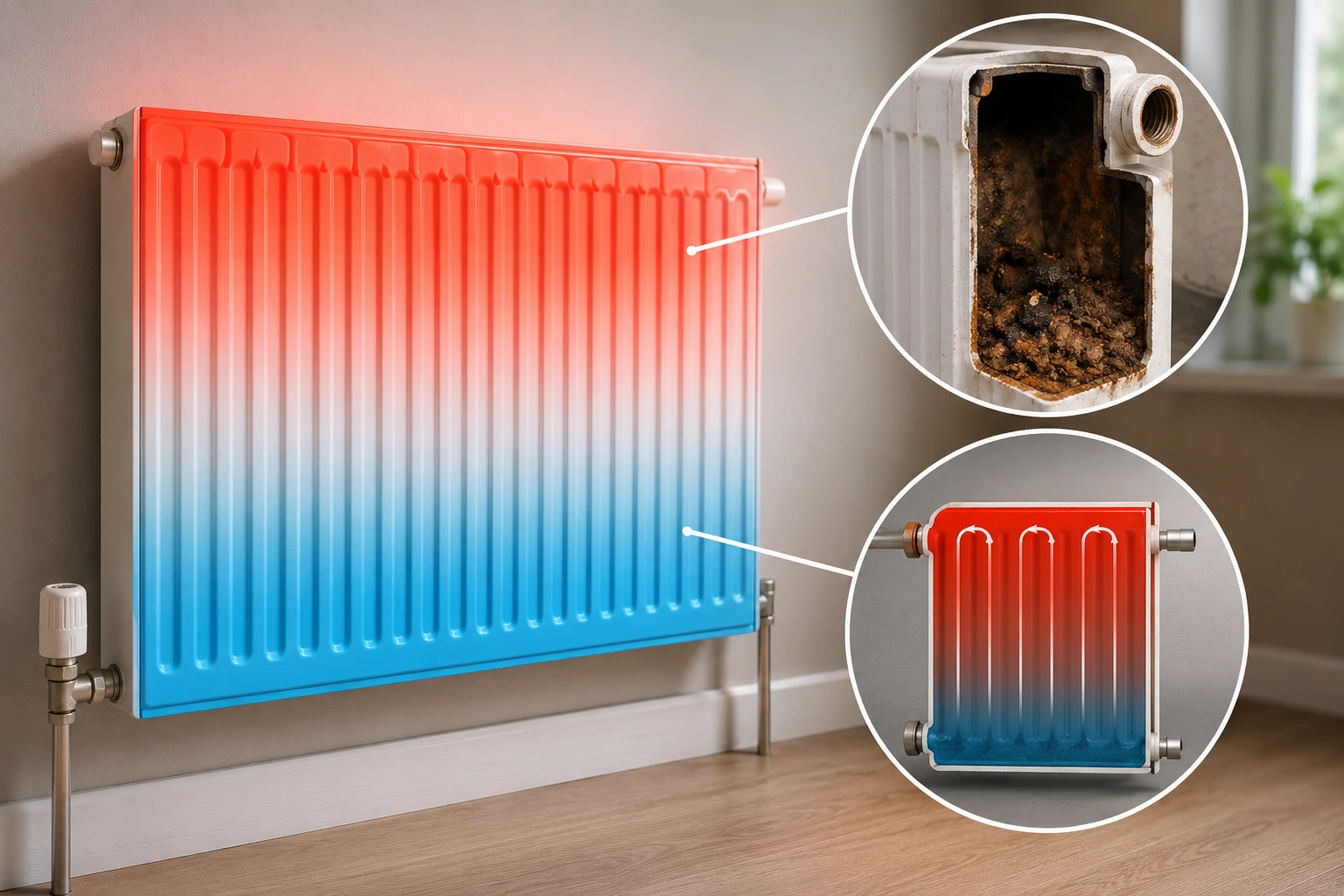
If you have noticed that your radiator is cold at the bottom but hot at the top, sludge is one of the first things worth considering.
What Causes Cold Radiators?
There is not always one single reason for a radiator not heating properly. The cause can depend on the age of your central heating system, the condition of the radiator, the boiler and pump, and how well the system has been maintained.
Common causes include sludge, trapped air, problems with the radiator valve, poor water circulation, low boiler pressure and faults elsewhere within the heating system.
Understanding the pattern of the cold radiator can provide useful clues.
For example, if the radiator is cold at the top and warm at the bottom, trapped air is more likely. If it is hot at the top but cold across the bottom, sludge or restricted circulation may be the problem.
If several radiators are affected at the same time, the issue may be within the wider central heating system rather than one individual radiator.
How Does Sludge Get Into a Central Heating System?
Sludge is generally associated with corrosion inside the heating system.
Central heating systems contain metal components, including radiators and sections of pipework. Over time, water and oxygen within the system can contribute to corrosion. The resulting particles can then circulate through the system before settling in areas where water flow is slower.
Radiators can become particularly affected because sludge may gradually accumulate at the bottom.
This means you may not notice a problem immediately. Your heating system can continue working for years while the amount of debris slowly increases.
Eventually, the build-up can become significant enough to affect circulation and heating performance.
This is one reason why regular heating maintenance is important, especially if your system is older or you have already experienced problems with cold radiators.
Could Trapped Air Cause a Cold Radiator?
Yes, but the symptoms are usually slightly different.
If the top of your radiator is cold while the bottom is warm, trapped air is a more likely explanation.
Air can enter a central heating system and collect inside radiators. Because air does not transfer heat in the same way as water, the affected part of the radiator may remain cold even though the rest is heating normally.
You may also hear bubbling, gurgling or other unusual noises coming from the radiator or pipework.
Bleeding a radiator can sometimes resolve an air-related problem. However, if you repeatedly need to bleed the same radiator, or bleeding does not improve the heating, there could be another issue that needs investigating.
It is also important not to assume that every cold radiator is caused by air. If your radiator is specifically cold at the bottom and hot at the top, sludge and poor circulation are more likely possibilities.
What Is the Difference Between Air and Sludge in a Radiator?
The temperature pattern can give you a useful indication.
A radiator that is cold at the top but warm at the bottom is often affected by trapped air. A radiator that is hot at the top but cold at the bottom may have sludge or restricted water circulation.
However, these symptoms are not a substitute for a professional diagnosis.
A central heating system is made up of several connected components, so a problem with one part can sometimes affect another. A faulty pump, valve or pressure issue can also cause radiators to heat unevenly.
If you have tried the straightforward checks and your radiator is still not heating correctly, it is worth having the system inspected rather than repeatedly adjusting individual radiators.
How Can I Fix a Radiator That Is Cold at the Bottom?
The right solution depends on the cause.
If trapped air is responsible, bleeding the radiator may resolve the problem. If a radiator valve is stuck or incorrectly adjusted, it may need attention.
However, if the problem is caused by sludge throughout the heating system, bleeding the radiator will not remove the sludge.
This is where professional cleaning may be appropriate.
A heating engineer can inspect the radiator and wider system to determine whether the issue is local to one radiator or whether the system needs cleaning.
It is better to identify the underlying cause than repeatedly treating the symptom.
What Is a Power Flush?
A power flush is a professional cleaning process designed to remove sludge, rust, debris and other contaminants from a central heating system.
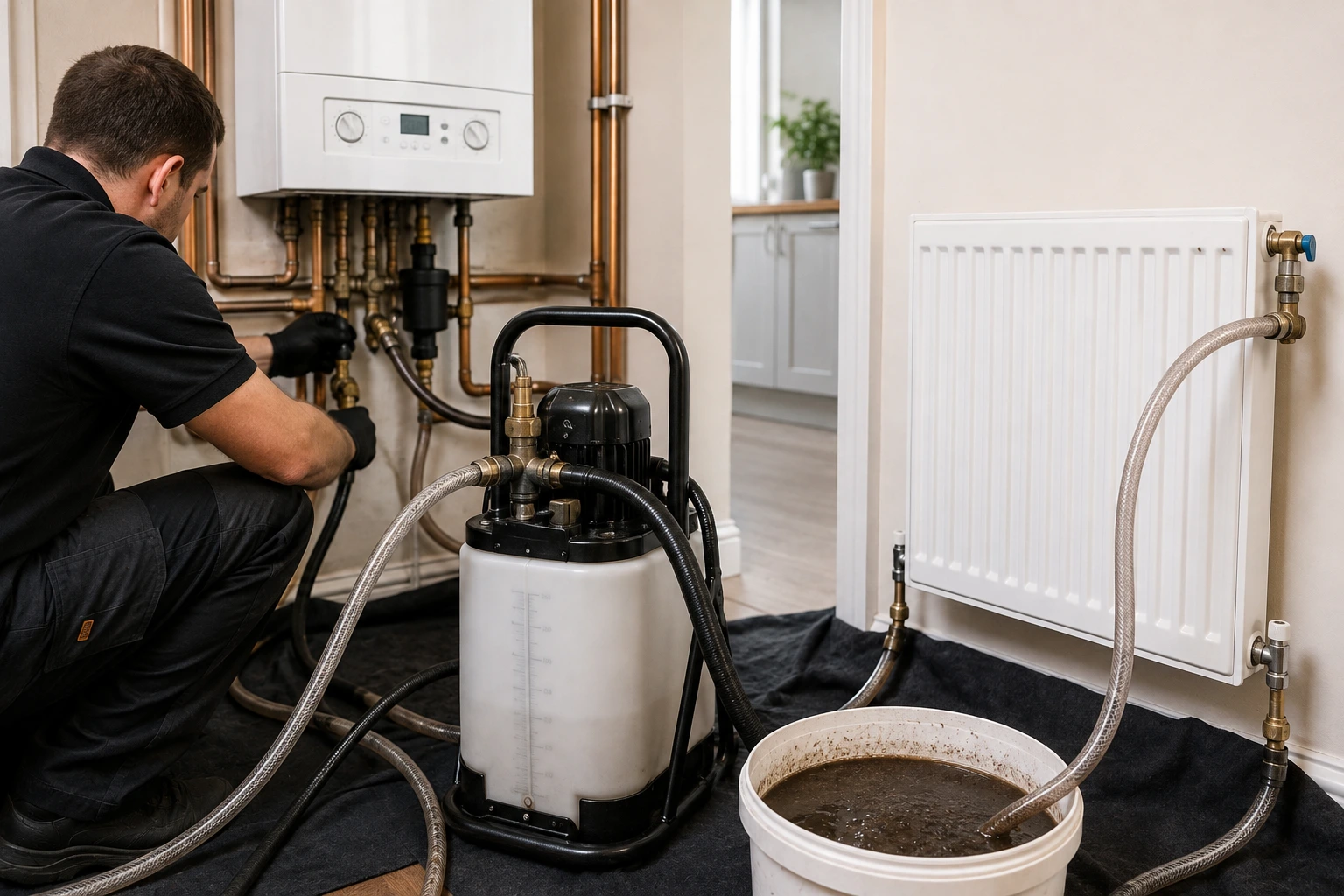
A specialist machine circulates cleaning chemicals through the radiators, pipework and heating system at high velocity but low pressure. This helps break down and remove the material that has accumulated inside the system.
Once the system has been thoroughly cleaned, the heating engineer can flush out the contaminated water and introduce a corrosion inhibitor to help reduce future build-up.
Buchanan Gas & Heating uses professional power flushing equipment and recommends the service for problems including cold radiator spots, slow heating, unusual boiler or pipe noises and discoloured water when bleeding radiators.
The objective is not simply to make one radiator warmer. A proper power flush is intended to improve circulation throughout the central heating system.
When Does Your Central Heating Need a Power Flush?
Not every heating system needs a power flush.
However, there are several signs that may indicate that professional system cleaning is worth considering.
One of the clearest is radiators with cold spots, particularly when the bottom of the radiator remains cold while the top becomes hot.
Other signs can include radiators taking a long time to heat, frequent heating problems, unusual banging or gurgling noises, dirty or discoloured water when bleeding radiators and certain circulation problems.
If you have recently had a new boiler installed but kept older radiators and pipework, it may also be worth checking the condition of the existing heating system.
Installing a new boiler does not automatically remove sludge and debris that has accumulated in old radiators and pipework.
In some situations, cleaning the existing system can help the new boiler operate alongside a cleaner and better-circulating heating system.
Buchanan Gas & Heating for Central Heating Problems
At Buchanan Gas & Heating, we understand how frustrating it can be when your heating system is not performing as it should, especially during the colder months.
Our Gas Safe registered engineers provide heating services including system maintenance, heating repairs, central heating installations, fault diagnosis and professional power flushing. We serve Coatbridge, Glasgow, Airdrie, Motherwell and surrounding areas.
If your radiators are cold at the bottom, taking too long to heat or developing cold spots, the cause could be sludge, trapped air, poor circulation, a faulty valve or another heating system issue.
Rather than replacing radiators or adjusting the boiler without understanding the cause, it is better to have the system assessed.
If sludge is identified as the problem, a professional power flush in Glasgow and surrounding areas may help restore circulation and improve the performance of your central heating system.
Buchanan Gas & Heating also provides emergency heating and boiler repairs when unexpected faults leave your home without heating or hot water.