Keeping your home warm does not have to mean constantly turning up the heating or accepting high energy bills. If your central heating system is properly maintained and used efficiently, you can often improve comfort while reducing unnecessary energy use.
From adjusting your heating controls to keeping radiators clear and making sure your boiler is working efficiently, there are several practical ways to improve central heating efficiency.
For homeowners in Glasgow, Coatbridge and the surrounding areas, understanding how your heating system works can also help you spot problems before they become expensive repairs. Here is how to improve heating efficiency, use less energy and keep your home comfortable throughout the colder months.
What Does Central Heating Efficiency Mean?
Central heating efficiency refers to how effectively your heating system converts energy into useful heat for your home.
A well-maintained boiler and heating system should be able to heat your property without using more energy than necessary. If your boiler is struggling, radiators are heating unevenly or the system contains sludge and debris, you may find that it takes longer to warm your home and your energy consumption increases.
Efficiency is not only about the boiler itself. Your radiators, pipework, heating controls, insulation and the way you use your heating all have an impact.
For example, a modern boiler may be capable of operating efficiently, but if the heating system has poor circulation because of sludge, the boiler may have to work harder to deliver the heat your home needs.
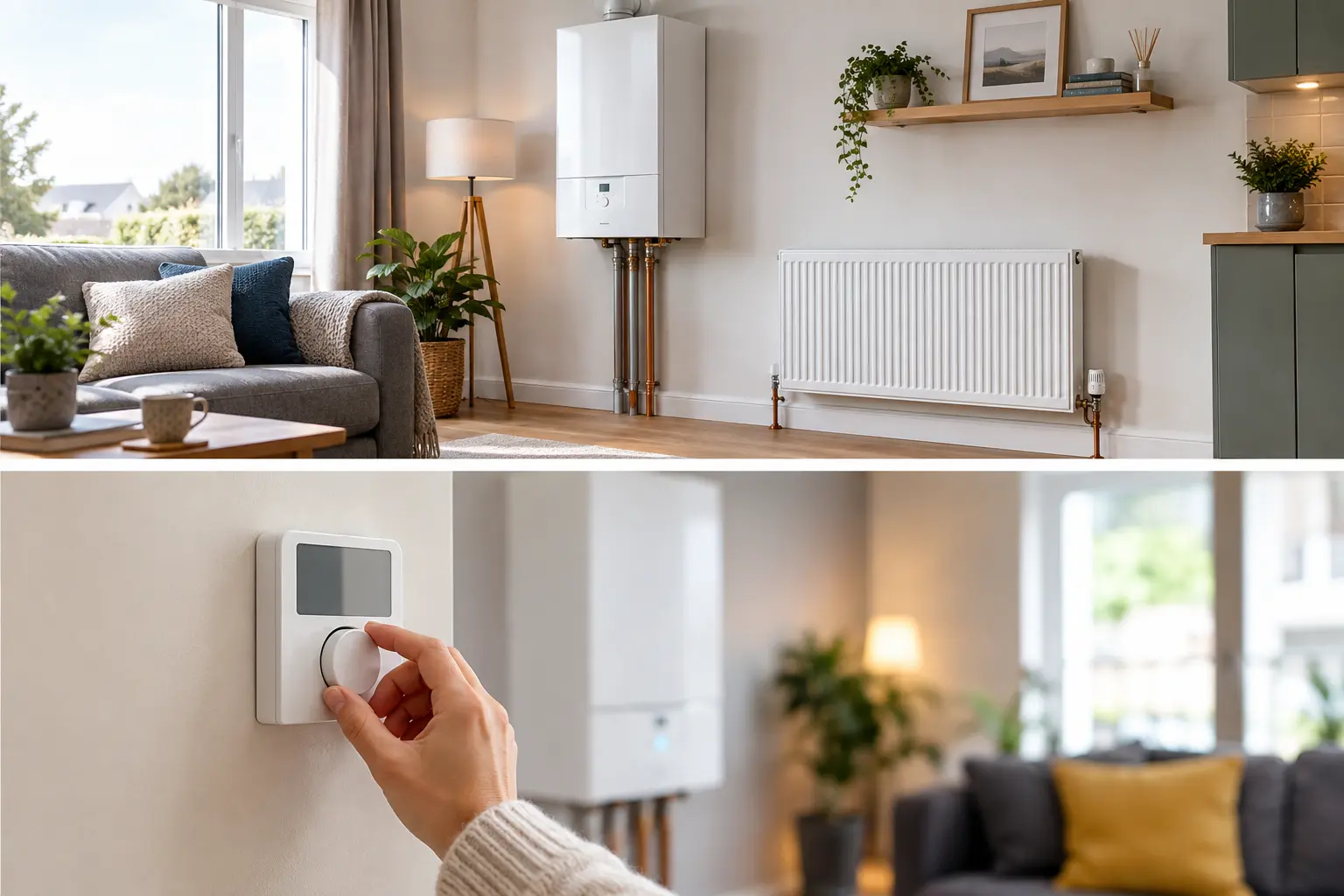
This is why improving energy efficient heating is often about looking at the entire system rather than focusing on one component.
1. Use Your Heating Controls Properly
One of the simplest ways to improve heating efficiency is to make better use of your thermostat and heating controls.
There is little benefit in heating an empty home to the same temperature you would want when you are there. Setting your heating to come on when you actually need it can help prevent unnecessary energy use.
A programmable thermostat or heating control can allow you to set different temperatures and heating periods throughout the day. For example, you may want your home warmer in the morning and evening but at a lower temperature while everyone is out.
Avoid turning the thermostat unnecessarily high in an attempt to heat your home faster. A higher thermostat setting does not make the boiler heat your property instantly. It simply tells the system to continue heating until the higher target temperature is reached.
Small changes to your heating schedule can make a noticeable difference over time.
2. Make Sure Your Radiators Are Working Properly
Radiators play an important role in the overall efficiency of your central heating system.
If a radiator takes a long time to heat, has cold spots or does not seem to distribute heat evenly, it may not be operating as effectively as it should.
Something as simple as furniture or curtains blocking a radiator can also prevent heat from circulating properly around the room. Try to keep the area around your radiators as clear as possible so warm air can move freely.
You should also pay attention to unusual temperature patterns.
For example, a radiator that is hot at the top but cold at the bottom can be a sign of sludge or restricted circulation. Buchanan Gas & Heating has covered this problem in more detail in its guide, Why Is My Radiator Cold at the Bottom but Hot at the Top?.
If several radiators are affected, the problem may be related to the wider central heating system rather than one individual radiator.
3. Bleed Radiators When Necessary
Air trapped inside a radiator can prevent it from heating properly.
If the top of a radiator feels colder than the bottom, trapped air may be responsible. In some cases, bleeding the radiator can release the trapped air and allow hot water to circulate properly again.
However, bleeding a radiator will not solve every heating problem.
If the radiator is hot at the top but cold at the bottom, sludge and debris may be more likely to blame. If you repeatedly need to bleed the same radiator or several radiators are affected, it is worth having the wider heating system checked.
Trying to repeatedly treat the symptom without identifying the underlying problem can leave your central heating operating inefficiently.
4. Consider Power Flushing for a Dirty Heating System
Sludge, rust and debris can accumulate inside central heating systems over time. This can restrict water circulation and make it harder for your radiators to distribute heat effectively.
A power flush is a professional cleaning process designed to remove this build-up from radiators, pipework and other parts of the heating system.
During a power flush, specialist equipment circulates cleaning chemicals through the system to break down and remove internal debris. Once the system has been cleaned, a corrosion inhibitor can be added to help protect it from future build-up.
Buchanan Gas & Heating provides professional power flushing services across Glasgow and surrounding areas.
Power flushing may be worth considering if you have:
- Radiators with persistent cold spots
- Radiators that take a long time to heat
- Banging or gurgling noises from the heating system
- Discoloured water when bleeding radiators
- Poor circulation
- Rising heating costs alongside declining system performance
A power flush is not necessary for every central heating system, but where sludge and restricted circulation are affecting performance, cleaning the system can help restore more effective heat distribution.
5. Keep Your Boiler Serviced
Regular boiler servicing is another important part of maintaining central heating efficiency.
During a boiler service, a qualified engineer can inspect the appliance, check its operation and identify potential faults before they become more serious. Buchanan Gas & Heating recommends annual boiler servicing to help keep boilers operating safely and efficiently.
A boiler that has not been maintained may gradually become less efficient or develop problems that affect its performance.
Annual servicing can also provide an opportunity to identify issues such as unusual combustion, faulty components or other problems affecting the boiler's operation.
If your boiler has not been serviced for more than a year, consider booking a boiler service with Buchanan Gas & Heating.
6. Check Your Boiler's Age and Performance
Boiler technology has changed significantly over the years. If you have an older boiler, it may not operate as efficiently as a modern replacement.
This does not mean every older boiler needs to be replaced immediately. If it is working safely and reliably, continuing to maintain it may make sense.
However, frequent breakdowns, increasing energy bills, declining heating performance and expensive repairs can all be reasons to investigate whether replacement would be more economical in the long term.
Buchanan's recent guide, Boiler Replacement in Coatbridge: 2026 Costs, Installation & Expert Advice, explains some of the signs that it may be time to consider a new system.
If replacement is necessary, choosing an appropriately sized boiler is important. A boiler that is significantly larger than your home's requirements is not automatically more efficient.
Buchanan's recent article on what boiler size you need for your home explains why factors such as property size, radiators, insulation, bathrooms and hot water demand should all be considered when selecting a boiler.
7. Choose an Energy-Efficient Boiler When Replacing an Old System
If your existing boiler is reaching the end of its useful life, replacing it with a modern, energy-efficient model can be an opportunity to improve your home's overall heating performance.
The right boiler depends on your property and how your household uses heating and hot water.
A combi boiler can be suitable for many smaller and medium-sized homes, while system boilers can be useful where there is greater hot water demand. Regular boilers can also remain appropriate for properties with traditional heating systems.
Buchanan Gas & Heating installs combi, system and regular boilers and can help homeowners assess which option is appropriate for their property. You can learn more about its boiler installation services.
It is important not to choose a boiler simply because it has the highest output. Correct sizing and professional installation are both important for achieving efficient heating.
8. Improve Your Home's Heat Retention
Your heating system can only do so much if your home loses heat quickly.
Poor insulation, draughty doors and windows and gaps around the property can all make it harder to maintain a comfortable indoor temperature.
Improving insulation and reducing unnecessary draughts can help your home retain the heat produced by your central heating system. This means your boiler may not need to run for as long to maintain the temperature you want.
Even simple measures such as closing curtains in the evening and keeping doors closed between rooms can help reduce heat loss.
If you are investing in larger home improvements, consider your property's insulation alongside your heating system. Improving one without considering the other can limit the overall benefit.
9. Avoid Heating Rooms You Do Not Need
If you have rooms that are rarely used, there may be no reason to heat them to the same temperature as the main living areas.
Thermostatic radiator valves can give you greater control over individual radiators, allowing you to adjust the temperature in different rooms.
For example, you may want your living room warmer during the evening while keeping a spare bedroom at a lower setting.
This approach can help you use your heating more strategically rather than heating the entire property to the same level regardless of how each room is used.
However, do not completely shut off heating in rooms where doing so could contribute to damp, condensation or freezing conditions. The right settings depend on your property and circumstances.
10. Do Not Ignore Unusual Heating Problems
A sudden increase in energy bills does not always mean that energy prices are the only explanation.
If your heating system is taking longer to warm the property, radiators are heating unevenly or the boiler is making unusual noises, there may be an underlying fault.
These symptoms can indicate problems with circulation, the boiler, radiators, valves or other components within the central heating system.
The sooner a problem is identified, the easier it may be to prevent it from affecting the rest of the system.
If your boiler stops working completely, Buchanan Gas & Heating also provides boiler repair services and emergency call-outs for heating problems.
How to Reduce Heating Bills Without Sacrificing Comfort
Improving central heating efficiency does not mean keeping your home uncomfortably cold.
Instead, the aim is to make sure the energy you use is being converted into useful heat as effectively as possible.
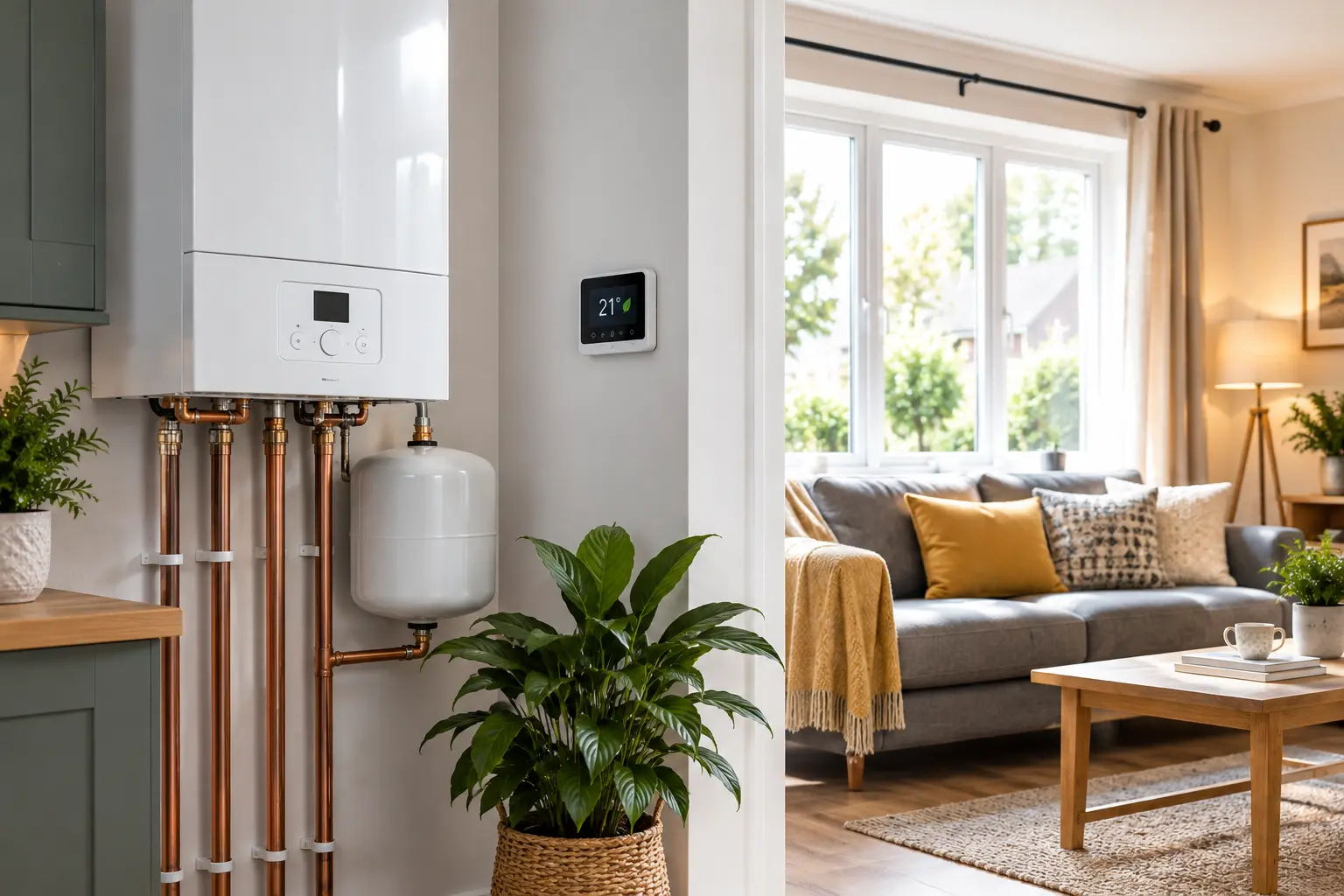
A few sensible habits can help:
- Set your heating schedule around when you actually use your home.
- Keep radiators clear so heat can circulate around rooms.
- Bleed radiators when trapped air is causing poor heating.
- Investigate persistent cold spots rather than ignoring them.
- Keep your boiler regularly serviced.
- Consider power flushing if sludge is affecting circulation.
- Improve insulation and reduce unnecessary draughts.
- Use thermostatic radiator valves where appropriate.
- Have heating problems investigated before they develop into larger faults.
- Consider replacing an old, inefficient boiler when repair and running costs are becoming excessive.
The key is to look at the whole heating system rather than relying on one change to solve everything.
When Should You Call a Heating Engineer?
Some heating-efficiency improvements are straightforward, but problems involving the boiler or gas system should be handled by a suitably qualified professional.
You should consider getting your heating system checked if you notice:
- Your energy bills have increased without an obvious change in usage
- The boiler is making unusual noises
- Radiators are taking longer to heat
- Several radiators have cold spots
- The heating is uneven throughout the property
- Your boiler frequently switches off or develops faults
- Your system needs regular repairs
- Your boiler is getting older and becoming increasingly expensive to run
A professional can assess whether the issue is related to the boiler, radiators, circulation, controls or another part of the system.
This can help you avoid replacing a boiler when the actual problem is elsewhere in the heating system.
Why Central Heating Maintenance Matters
Good heating efficiency is not only about reducing your energy bills. A properly maintained system can provide more consistent warmth, reduce unnecessary strain on equipment and help you identify potential problems earlier.
For example, a system affected by sludge may still produce heat, but the heat may not be distributed effectively throughout the property. Cleaning the system can sometimes be a more appropriate solution than immediately replacing the boiler.
Likewise, an older boiler may continue working but become increasingly expensive to repair and operate.
Taking a preventative approach allows you to deal with smaller problems before they become major heating issues.
Improve Your Central Heating Efficiency
You do not necessarily need a completely new heating system to improve central heating efficiency. Better heating controls, regular boiler servicing, properly functioning radiators and good system maintenance can all contribute to more efficient heating.
However, if your system is old, frequently breaking down or struggling to heat your home, it may be time for a professional assessment.
Buchanan Gas & Heating provides boiler installation, boiler servicing, boiler repairs, central heating and power flushing services across Glasgow and surrounding areas. Our qualified engineers can assess your heating system and recommend the most appropriate solution for your home.
If you want to improve your heating efficiency or need advice on how to reduce heating bills, contact Buchanan Gas & Heating today for professional advice and a quote.
Frequently Asked Questions
There is no single solution that works for every property. Energy efficient heating depends on having an appropriately sized and well-maintained boiler, good system circulation, effective heating controls and a property that retains heat well.